Advertisement
Header Banner Sponsor Placement (728x90)

Best Nonstick Frying Pans: 5 Top Picks for Home Cooking

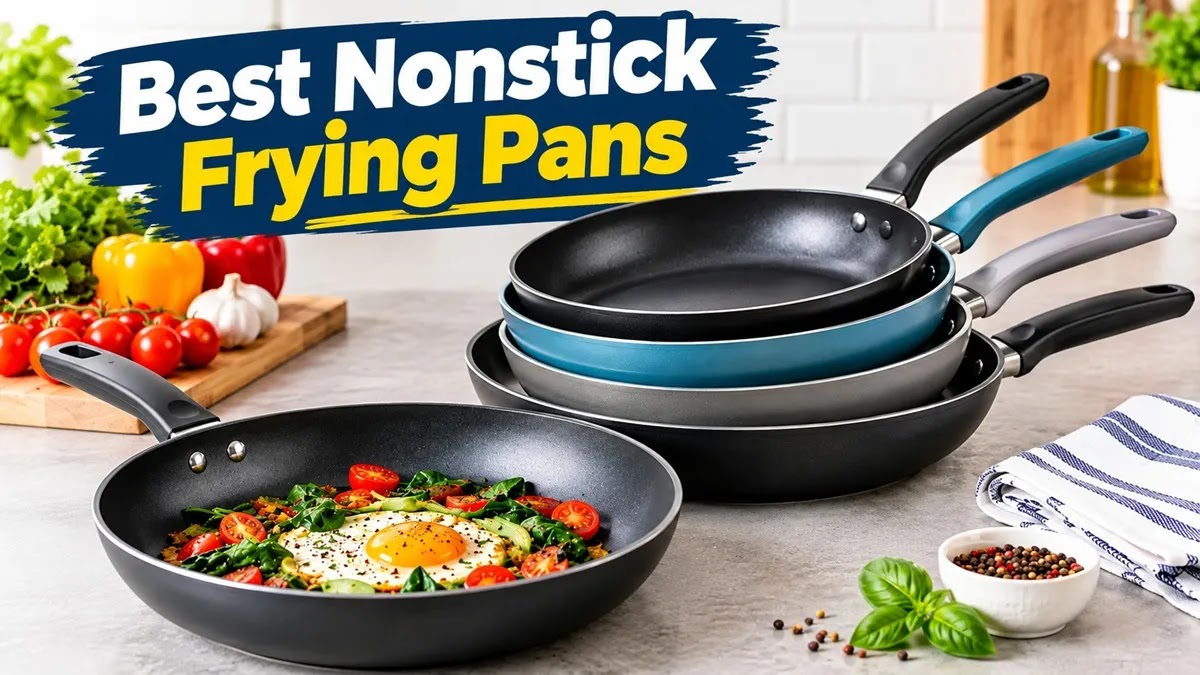
The best nonstick frying pans make everyday cooking easier, from flipping eggs to preparing delicate fish and pancakes. This guide compares five popular skillets by coating type, heat distribution, stovetop compatibility, ease of cleaning, and value to help you choose the right pan for your kitchen.
C
Cookeek Editorial
*Cookeek earns affiliate commissions on qualifying Amazon purchases.
Advertisement
Featured Kitchenware Partner Sponsor

The best nonstick frying pans make it easier to cook eggs, pancakes, fish, and other delicate foods without struggling with stuck-on residue. However, not every nonstick skillet offers the same cooking experience. Differences in coating materials, pan construction, handle design, and stovetop compatibility can significantly affect which model suits your kitchen. For most home cooks who prefer a ceramic nonstick surface without intentionally added PFAS, the GreenPan Valencia Pro is a strong research-based starting point. It combines hard-anodized aluminum construction, an induction-compatible base, and a ceramic coating. It has also received favorable coverage from independent cookware reviewers. That does not mean ceramic is the right choice for everyone. Traditional PTFE-coated pans, such as the All-Clad HA1, may appeal to cooks who prioritize easy food release and versatile stovetop use. Budget-conscious shoppers may prefer a straightforward everyday skillet rather than paying for premium construction. This guide compares five nonstick frying pans, explains their practical trade-offs, and covers everything from choosing the right diameter to maintaining the coating. It also addresses ceramic versus PTFE cookware, induction compatibility, cleaning, and safety considerations so you can make an informed purchase. Research note: Product specifications and independent editorial coverage were reviewed for this guide. Cookeek.com has not independently tested these five pans side by side. Prices, availability, exact model numbers, and warranty terms should be verified on the current product listing before publication.

Quick Specs & Top Picks

Side-by-Side Comparison

Image Product Key Feature Buy Now
GreenPan Valencia Pro πŸ† Best Overall GreenPan Valencia Pro The Valencia Pro earns the leading position because its published specifications cover several practical needs at once. It offers ceramic nonstick cooking, an induction-compatible base, hard-anodized construction, and an oven-safe rating that exceeds the needs of many ordinary stovetop recipes. Buy Now
Tramontina Professional Fusion πŸ† Best Budget-Oriented Pick Tramontina Professional Fusion The Tramontina's strongest argument is practicality. A useful everyday frying pan does not need an elaborate feature set: a suitable diameter, comfortable grip, functional sides, and a dependable nonstick surface are more important for many home cooks than luxury finishes. Buy Now
OXO Non-Stick Pro Everyday πŸ† Everyday Simplicity OXO Non-Stick Pro Everyday The main appeal of this OXO version is its clear everyday-use profile. It has a ceramic surface, a comfortable handle, and rolled edges that help when transferring food or pouring off small amounts of liquid. Buy Now
T-fal Ultimate Hard Anodized πŸ† Traditional Nonstick T-fal Ultimate Hard Anodized T-fal's main advantage is its accessible, familiar approach to nonstick cooking. The brand offers multiple cookware configurations, and a heat indicator on selected versions provides a useful visual reference. Buy Now

Best 5 Tested & Recommended Nonstick Frying Pans

πŸ† Best Overall

1. GreenPan Valencia Pro (paid link)

🌟 Key Features That Stand Out

  • βœ“ Ceramic nonstick coating: Designed to release food easily and simplify everyday cooking.
  • βœ“ Hard-anodized aluminum body: Provides a sturdy pan structure and responsive heating.
  • βœ“ Induction-compatible base: Suitable for induction, gas, electric, and other listed cooktops.
  • βœ“ High oven-safe rating: The manufacturer lists up to 600Β°F for the pan; covered versions have a separate, lower lid limit.
  • βœ“ Diamond-infused surface: A coating feature marketed to improve surface durability.
  • βœ“ Multiple sizes: Available in several diameters, depending on the specific product version.
  • βœ“ Simplified cleaning: Dishwasher use is listed as permitted, although hand-washing is recommended to help preserve the coating.

πŸ’‘ Why We Recommend It

The Valencia Pro earns the leading position because its published specifications cover several practical needs at once. It offers ceramic nonstick cooking, an induction-compatible base, hard-anodized construction, and an oven-safe rating that exceeds the needs of many ordinary stovetop recipes. That combination makes it a versatile choice rather than a narrowly specialized egg pan. Its independent editorial track record is another reason to consider it. Bon AppΓ©tit named it its overall pick in its 2026 nonstick-pan coverage, and The Kitchn has also recommended the model after ceramic skillet testing. The main qualification is longevity. Ceramic nonstick surfaces can gradually lose their easy-release performance, and a higher purchase price does not eliminate that limitation. The pan's oven rating should not be mistaken for a recommendation to cook on high heat routinely. For shoppers who specifically want conventional PTFE nonstick, All-Clad or T-fal may be a better fit.

🎯 Best For

This pan suits home cooks who regularly prepare eggs, omelets, pancakes, vegetables, and delicate fish. It is particularly relevant for households with induction cooktops that want a ceramic nonstick surface. Buyers who prefer cookware marketed as PFAS-free should still check the exact product documentation and distinguish the cooking coating from other product components. It may be less appealing to shoppers who want a pan for frequent high-heat searing or who expect a nonstick coating to last as long as bare stainless steel or cast iron. Even premium ceramic coatings wear with use, and careful heat control and cleaning remain important.

βš–οΈ Pros and Cons

βœ… Pros
  • Ceramic coating marketed as free of intentionally added PFAS.
  • Induction-compatible construction.
  • Hard-anodized aluminum body.
  • Multiple sizes for different household needs.
  • Published oven-safe rating up to 600Β°F for the pan itself.
  • Favorable coverage from independent cookware reviewers.
❌ Cons
  • Ceramic coating can lose its nonstick properties over time.
  • Premium variants may cost more than basic skillets.
  • Careful heat and utensil choices are still advisable.
  • Lid temperature limits differ from pan temperature limits.
πŸ† Best Budget-Oriented Pick

2. Tramontina Professional Fusion (paid link)

🌟 Key Features That Stand Out

  • βœ“ Aluminum construction: A common choice for responsive stovetop heating.
  • βœ“ Nonstick cooking surface: Helps with delicate foods and easier cleanup.
  • βœ“ Sloped sides: Support stirring, tossing, and sliding food onto plates.
  • βœ“ Comfortable handle: The commonly reviewed version features a silicone-wrapped grip.
  • βœ“ Everyday skillet format: Suitable for eggs, pancakes, vegetables, and smaller sautΓ©ing tasks.
  • βœ“ Multiple sizes: Available in different diameters depending on the product listing.
  • βœ“ Value-oriented positioning: Independent coverage has highlighted the 10-inch pan as a budget-conscious option.

πŸ’‘ Why We Recommend It

The Tramontina's strongest argument is practicality. A useful everyday frying pan does not need an elaborate feature set: a suitable diameter, comfortable grip, functional sides, and a dependable nonstick surface are more important for many home cooks than luxury finishes. Good Housekeeping's recent coverage identified the Professional Fusion 10-inch model as a value-oriented nonstick pick. That gives it a reasonable place in a buying guide, although this guide has not independently verified current pricing or compared the pan head-to-head with every alternative. Its biggest limitation is that buyers should not assume it has the same induction compatibility, oven rating, or coating composition as higher-priced alternatives. Confirm the exact model before purchasing. If you use induction or want a documented ceramic option, GreenPan Valencia Pro is a more straightforward candidate to investigate.

🎯 Best For

Consider this skillet if you want a straightforward pan for breakfast, quick lunches, and routine weeknight cooking. Its sloped profile is helpful when you frequently flip pancakes, turn vegetables, or slide an omelet onto a plate. It may also appeal to first-time apartment dwellers or households building a cookware collection one piece at a time. Before buying, verify whether the specific listing supports induction, the oven temperature limit, and the recommended utensils. Do not assume that every Professional Fusion variant has identical specifications. If you need a ceramic coating specifically or regularly transfer pans to the oven, compare the relevant product documentation with the alternatives in this guide.

βš–οΈ Pros and Cons

βœ… Pros
  • Practical design for everyday cooking.
  • Sloped sides support turning and transferring food.
  • Silicone-wrapped grip on the commonly reviewed version.
  • Value-oriented option in independent editorial coverage.
  • Useful for eggs, pancakes, and sautΓ©ed vegetables.
❌ Cons
  • Exact specifications need to be confirmed for the chosen variant.
  • Coating durability remains a long-term consideration.
  • Induction compatibility should not be assumed.
  • May lack the documented oven versatility of some premium alternatives.
πŸ† Everyday Simplicity

3. OXO Non-Stick Pro Everyday (paid link)

🌟 Key Features That Stand Out

  • βœ“ Ceramic nonstick surface: Designed for easy food release.
  • βœ“ Hard-anodized construction: Supports responsive heating.
  • βœ“ Silicone-wrapped handle: Provides a comfortable grip.
  • βœ“ Oven-safe to 392Β°F: Follow the manufacturer's temperature limits.
  • βœ“ Dishwasher-safe listing: Hand-washing may help preserve the coating.
  • βœ“ Rolled edges: Help reduce drips when transferring food.
  • βœ“ Non-induction compatibility: The manufacturer lists this version as unsuitable for induction cooktops.

πŸ’‘ Why We Recommend It

The main appeal of this OXO version is its clear everyday-use profile. It has a ceramic surface, a comfortable handle, and rolled edges that help when transferring food or pouring off small amounts of liquid. The manufacturer also publishes a defined oven limit and cooktop compatibility, which helps buyers assess whether it fits their kitchen before purchasing. Its limitation is not a lack of features so much as a narrower use case. The absence of induction compatibility rules it out for some households, while the oven limit may be restrictive for recipes requiring hotter finishing temperatures. OXO lists the pan as dishwasher-safe, but hand-washing remains a reasonable way to be gentler with coated cookware. For a straightforward ceramic skillet on a compatible cooktop, it deserves consideration. For induction or more demanding oven use, look elsewhere.

🎯 Best For

The OXO is a candidate for cooks who use gas or compatible electric cooktops and want a ceramic nonstick pan for simple daily meals. It is particularly relevant if you prepare eggs, pancakes, or vegetables and prefer a handle with a softer grip. The manufacturer's published weight is about 1.66 pounds, which may appeal to buyers who do not want a heavy skillet. However, it is not a fit for induction users. The 392Β°F oven limit also gives it less oven flexibility than the All-Clad HA1 or GreenPan Valencia Pro. Check the exact product generation, since the OXO brand sells several cookware lines with different specifications.

βš–οΈ Pros and Cons

βœ… Pros
  • Ceramic nonstick cooking surface.
  • Comfortable silicone-wrapped handle.
  • Rolled edges for easier pouring.
  • Lightweight published specification.
  • Defined oven temperature limit.
  • Manufacturer care and compatibility details are available.
❌ Cons
  • Not compatible with induction according to the manufacturer.
  • Lower oven-safe limit than some competing pans.
  • Coating longevity depends on care and use.
  • The exact product version should be checked before buying.
πŸ† Traditional Nonstick

4. T-fal Ultimate Hard Anodized (paid link)

🌟 Key Features That Stand Out

  • βœ“ Traditional nonstick surface: Designed to make food release and cleanup easier.
  • βœ“ Hard-anodized exterior: Provides a sturdy outer construction.
  • βœ“ Heat indicator on some versions: Helps signal a suggested preheating point.
  • βœ“ Everyday cooking format: Suitable for common skillet tasks such as eggs and pancakes.
  • βœ“ Multiple size configurations: Available in individual pans and sets, depending on the listing.
  • βœ“ Practical cookware design: Intended for routine home use.
  • βœ“ Variant-specific specifications: Verify induction compatibility, oven limits, and cleaning instructions for the exact model.

πŸ’‘ Why We Recommend It

T-fal's main advantage is its accessible, familiar approach to nonstick cooking. The brand offers multiple cookware configurations, and a heat indicator on selected versions provides a useful visual reference. For ordinary meals where easy food release and simple cleanup matter most, this type of skillet can be a practical choice. The key is to shop by exact model rather than by brand name alone. T-fal sells different pans and sets, and features such as heat indicators, induction compatibility, and oven-safe limits should not be assumed to carry across the entire range. Check the manufacturer's instructions for the selected model, including heat limits and utensil recommendations. Compared with GreenPan, T-fal is the option to investigate when you prefer conventional nonstick rather than ceramic. Compared with All-Clad, it may appeal to buyers who do not need the same published oven rating or construction features. The final value depends on the exact variant and current listing price.

🎯 Best For

Consider T-fal if you prefer a conventional nonstick surface and want a pan for everyday breakfasts, quick meals, and foods that can be difficult to release from stainless steel. A heat indicator may also be useful for cooks who appreciate a visual cue during preheating. It is not the automatic choice for people who want a ceramic coating marketed as PFAS-free. Buyers should also confirm whether the exact model is suitable for their cooktop, particularly if they use induction. Those seeking a more thoroughly documented oven-safe specification may prefer the All-Clad HA1 or GreenPan Valencia Pro, depending on coating preference.

βš–οΈ Pros and Cons

βœ… Pros
  • Traditional nonstick cooking surface.
  • Familiar everyday skillet format.
  • Heat indicator available on selected versions
  • Multiple sizes and configurations.
  • Suitable for common nonstick cooking tasks.
❌ Cons
  • Features vary across models and sets.
  • Coating material may not suit shoppers seeking ceramic cookware.
  • Induction and oven compatibility need verification.
  • Nonstick performance can decline with use.

πŸ† Our Top Pick

After comparing all five, our top recommendation is:

GreenPan Valencia Pro

The Valencia Pro earns the leading position because its published specifications cover several practical needs at once. It offers ceramic nonstick cooking, an induction-compatible base, hard-anodized construction, and an oven-safe rating that exceeds the needs of many ordinary stovetop recipes.

The best nonstick frying pans balance easy food release, suitable construction, comfortable handling, and manageable cleaning. The right choice also depends on your cooktop and whether you prefer ceramic or conventional PTFE nonstick.

For most shoppers who want ceramic nonstick and induction compatibility, the GreenPan Valencia Pro is our top recommendation. Its published specifications and independent editorial coverage make it a strong option for everyday eggs, pancakes, vegetables, and other delicate foods.

If your priority is affordability, compare the Tramontina Professional Fusion with the exact T-fal Ultimate Hard Anodized model available to you. Check their specifications carefully rather than assuming every version has the same features. For buyers who prefer traditional PTFE nonstick and want documented induction and oven compatibility, the All-Clad HA1 Expert is worth considering. The OXO Non-Stick Pro Everyday is another candidate for simple daily cooking on a compatible non-induction stove.

Before purchasing, verify the size, coating, cooktop compatibility, oven limits, warranty, and current price. Remember that no coated pan lasts forever, and a premium label does not eliminate ordinary wear.

Our recommendation: Start with GreenPan Valencia Pro if its ceramic coating and features match your preferences. Choose another model when its specific advantages better suit your kitchen.

How to Choose the Best Nonstick Frying Pans

The right skillet should match your cooking habits, stove, cleaning preferences, and expectations for durability. Start with these eight criteria before comparing brands.

9.1 Choose the Right Pan Size

An 8-inch skillet is useful for a single egg, a small omelet, or a compact portion. A 10-inch pan is a versatile choice for everyday breakfasts and smaller household meals. A 12-inch pan gives you more space for several eggs, larger portions of vegetables, or multiple pieces of fish.

Remember that the advertised diameter usually refers to the pan's top rim, not the flat cooking surface. Sloped sides reduce the usable base area. If you often cook for several people, compare the flat bottom diameter as well as the overall size.

Buying tip: A 10-inch skillet is a sensible starting point for many kitchens. If you routinely cook large meals, a 12-inch pan may be more useful.

9.2 Understand Ceramic vs. PTFE Nonstick

Ceramic nonstick pans use a ceramic-based coating, often marketed as free of intentionally added PFAS. Conventional nonstick pans commonly use PTFE, a fluoropolymer that provides easy food release.

Neither category is automatically better for every buyer. Ceramic may appeal to people seeking a coating marketed as PFAS-free, while PTFE pans can provide excellent release when used according to the manufacturer's instructions. Coating longevity varies with construction, use, and care.

Read the manufacturer's documentation rather than relying on broad labels such as "healthy," "green," or "non-toxic." Also distinguish the coating from the complete pan: a claim about the cooking surface does not necessarily describe every component.

9.3 Check Cooktop Compatibility

Gas and conventional electric cooktops can accommodate many aluminum pans. Induction cooktops require a compatible magnetic base, so an aluminum pan may not work unless it includes the appropriate construction.

Do not assume that all pans from one brand support induction. OXO explicitly excludes induction for the cited Pro Everyday version, while GreenPan Valencia Pro and All-Clad HA1 list induction compatibility.

OXO+2


For glass-top electric ranges, check the base shape and care instructions. A flat, stable base helps establish good contact with the cooking surface.

9.4 Evaluate Heat Distribution and Temperature Control

Aluminum is widely used in nonstick cookware because it heats relatively quickly. The base's thickness and construction affect how evenly the pan heats and how well it responds when you change the burner setting.

A pan with uneven heating may brown pancakes inconsistently or cook one part of an omelet faster than another. However, no material specification alone proves that a particular pan heats evenly; independent testing is more informative.

For coated pans, high maximum oven ratings do not mean that continuous high-heat stovetop cooking is advisable. Use the temperature and preheating instructions supplied with the product.

9.5 Consider Weight, Handle Design, and Balance

A lightweight skillet is easier to lift, turn, and wash. A heavier pan may feel more substantial, but it can be awkward to maneuver, particularly when full.

Look for a handle that feels secure and has a shape you can comfortably hold. Riveted handles are common, while rivetless interiors can make cleanup easier by removing small crevices where residue collects. Neither design guarantees superior performance on its own.

If you regularly slide omelets onto plates, a pan with sloped sides may be more practical than one with tall, straight sides.

9.6 Read Oven-Safe and Dishwasher Instructions

Oven-safe temperatures vary by model. The pan and lid may have different limits, and some handles or components impose additional restrictions. For example, the cited All-Clad HA1 documentation lists 500Β°F for the pan and 350Β°F for its lids, while GreenPan lists up to 600Β°F for the pan and 425Β°F for the lid on the covered Valencia Pro version.

Dishwasher-safe does not necessarily mean dishwasher use is best for longevity. Repeated exposure to harsh detergents and high-temperature cycles can be harder on cookware coatings. Check the manual and consider hand-washing to help preserve the cooking surface.

9.7 Compare Warranty Coverage and Value

A cookware warranty may cover manufacturing defects but exclude normal coating wear, misuse, overheating, or damage from unsuitable utensils. Read the exclusions rather than relying on a broad "lifetime warranty" headline.

Compare the total value of the pan you will actually use. Paying more may make sense if you need induction compatibility, a specific coating, or an oven-safe design. It may not be worthwhile if you mainly prepare eggs and pancakes on the stovetop.

Check the current price, return policy, exact model, and warranty terms before ordering.

9.8 Avoid Common Buying Mistakes

  • Buying a pan that does not work on your induction cooktop.
  • Choosing a diameter too small for your usual portions.
  • Assuming ceramic coatings never wear out.
  • Treating an oven-safe rating as permission for high-heat stovetop cooking.
  • Using metal utensils without checking manufacturer guidance.
  • Assuming every version of a product has identical specifications.
  • Paying for features that do not match your cooking routine.

A little research before purchasing is often more useful than simply choosing the pan with the most impressive marketing claims.


Practical Tips for Getting the Most From a Nonstick Frying Pan

The way you use and clean a coated skillet can influence how long its surface remains useful. These tips apply broadly, but the specific manufacturer's instructions should take priority.

1. Wash before first use. Clean the pan with warm water and mild dish soap, then dry it. Follow any additional preparation instructions included with the product.

2. Use low to medium heat for most cooking. Nonstick pans generally do not need extreme heat for eggs, pancakes, or delicate fish. Follow the model's stated limits and avoid heating an empty pan for an extended period.

3. Preheat gently. Allow the pan to warm gradually. If your model includes a heat indicator, treat it as a guide rather than a substitute for the manufacturer's instructions or your recipe's temperature requirements.

4. Choose suitable utensils. Silicone, nylon, and wood are common choices for protecting coated surfaces. Avoid sharp metal edges unless the manufacturer specifically permits them, and remember that even a metal-utensil-safe claim does not make a coating indestructible.

5. Let the pan cool before washing. Sudden temperature changes can stress cookware. Avoid putting a very hot pan directly under cold water.

6. Use gentle cleaning tools. A soft sponge and mild dish soap are usually suitable for everyday residue. Avoid steel wool, abrasive scouring pads, and harsh cleaners unless the manufacturer explicitly recommends them.

7. Store pans carefully. Stacking pans directly on top of one another can scratch their surfaces. Use a protective separator or hang them when practical.

8. Replace damaged cookware when necessary. If the coating is substantially peeling, flaking, or no longer functions as intended, consult the manufacturer's guidance and consider replacing the pan. Do not attempt to restore a badly damaged coating with improvised treatments.

These steps are especially relevant if you want to get reasonable service from a ceramic or PTFE-coated pan without accelerating wear.

Ceramic vs. PTFE Nonstick Frying Pans

Ceramic and PTFE pans can both be useful, but they serve buyers with different preferences.

Ceramic nonstick cookware is often marketed as free of intentionally added PFAS. It appeals to shoppers who want to avoid conventional fluoropolymer nonstick coatings. Its limitation is that the easy-release performance can decline with use, including when the pan is relatively expensive.

PTFE cookware is valued for its nonstick properties. The All-Clad HA1, for example, uses PTFE and has a published induction-compatible base and oven-safe rating. Its coating must still be used within the manufacturer's temperature and care guidelines.

Buying priorityConsider
Ceramic coating preferenceGreenPan Valencia Pro or the cited OXO version
Traditional PTFE nonstickAll-Clad HA1 or an appropriate T-fal variant
Induction compatibilityVerify GreenPan or All-Clad's exact model
Straightforward everyday valueCompare Tramontina's verified model with T-fal
Long-term surface durabilityConsider whether stainless steel or cast iron better suits your needs

Neither coating type eliminates the need to replace a pan when its cooking surface deteriorates. Choose according to your preferences, cooking habits, and the manufacturer's documentation.

What Size Nonstick Frying Pan Do You Need?

The best size depends on how much food you prepare at once.

An 8-inch skillet works well for small portions and compact kitchens. A 10-inch skillet is a versatile option for eggs, pancakes, and meals for one or two people. A 12-inch skillet offers more room for family breakfasts, several portions of vegetables, or multiple pieces of fish.

A larger pan is not automatically better. If the cooking surface is much wider than the burner, heat distribution can be less consistent, particularly on some electric cooktops. Conversely, overcrowding a small skillet can prevent food from browning evenly.

For a first purchase, consider a 10-inch pan unless your household routinely cooks larger quantities. If you prepare different portion sizes throughout the week, a 10-inch and 12-inch pair may be more practical than relying on one pan for every task.

Are Premium Nonstick Frying Pans Worth the Money?

A premium nonstick skillet may justify its cost through better construction, more suitable handle design, induction compatibility, or a higher published oven-safe limit. Those features can matter when you cook frequently or need a pan that works across multiple cooking methods.

However, premium pricing does not guarantee that a nonstick coating will last indefinitely. Both ceramic and conventional nonstick surfaces can lose their easy-release properties with use. A more expensive pan may also be unnecessarily heavy or offer features you rarely need.

Before paying extra, identify the specific problem you want to solve. If you need induction compatibility, verify the base. If you often finish dishes in the oven, compare the pan and lid temperature limits. If you mainly cook eggs, a comfortable, appropriately sized everyday skillet may offer better practical value than a premium model.

The best purchase is the one that meets your actual requirements, not necessarily the most expensive option.

When Should You Replace a Nonstick Frying Pan?

A nonstick frying pan should be evaluated by its condition rather than by a universal age limit. There is no single lifespan that applies to every coating, cooking frequency, or care routine.

Consider replacement if the coating is peeling or flaking, the pan has become difficult to clean, the surface has deteriorated substantially, or the pan has warped enough to sit unstably on the stove. Consult the manufacturer if you are unsure whether a damaged surface remains suitable for use.

Small cosmetic marks do not always mean the same thing as substantial coating damage, so examine the product's care guidance rather than relying on appearance alone.

To extend the useful life of a new pan, avoid overheating it, use appropriate utensils, clean it gently, and protect the cooking surface during storage. These habits can slow wear, but they cannot guarantee a particular lifespan.

Frequently asked questions

β–Ά What is the best nonstick frying pan for everyday cooking?
The GreenPan Valencia Pro is our overall recommendation for shoppers who want ceramic nonstick, hard-anodized construction, and induction compatibility. It is not necessarily the best choice for everyone, though. Buyers who prefer conventional PTFE nonstick may prefer All-Clad HA1, while value-focused shoppers should compare the exact Tramontina and T-fal models available.
β–Ά Is ceramic or PTFE better for nonstick frying pans?
Ceramic and PTFE coatings offer different benefits. Ceramic cookware appeals to people seeking a coating marketed as free of intentionally added PFAS, while PTFE coatings are known for easy food release. Both can wear with use. Choose based on your coating preferences, cooking habits, and the manufacturer's care instructions rather than assuming one type is universally superior.
β–Ά Are nonstick frying pans safe to use?
Nonstick pans can be used appropriately when you follow their manufacturer's instructions. For PTFE cookware, avoid overheating the pan, especially when empty, and use it within its specified temperature limits. If you prefer to avoid conventional PTFE coatings, consider a ceramic-coated alternative with clear material disclosures. Discontinue use of a pan with substantially peeling or flaking coating and consult the manufacturer.
β–Ά Can you use nonstick frying pans on induction cooktops?
Yes, provided the specific pan is induction-compatible. Induction stoves require a suitable magnetic base, and not every aluminum skillet has one. GreenPan Valencia Pro and All-Clad HA1 list induction compatibility, while the cited OXO Pro Everyday model does not. Always verify the exact product listing before ordering.
β–Ά What is the best nonstick frying pan size?
A 10-inch skillet is a versatile starting point for eggs, pancakes, vegetables, and smaller household meals. An 8-inch pan is useful for single portions, while a 12-inch skillet gives you more room for larger meals. Consider the flat cooking surface and burner size, not just the diameter printed on the package.
β–Ά How long does a nonstick frying pan last?
There is no universal lifespan for nonstick cookware. Longevity depends on the coating, construction, cooking frequency, temperature, utensils, and cleaning habits. Ceramic and PTFE coatings can both lose their easy-release performance over time. Gentle cleaning, moderate heat, and careful storage may help reduce wear, but no care routine guarantees a particular service life.
β–Ά Are dishwasher-safe nonstick pans worth buying?
Dishwasher compatibility is convenient, but it does not mean dishwasher cleaning is the best choice for long-term coating care. Detergents, heat, and repeated washing cycles can be harder on cookware surfaces. Check the manual for your particular pan. When permitted, gentle hand-washing is a sensible option if preserving the coating is a priority.
β–Ά Can you use metal utensils on a ceramic nonstick frying pan?
It depends on the manufacturer's instructions, but silicone, wood, or nylon utensils are generally the more conservative choice. Some pans are marketed as metal-utensil-safe, yet repeated scraping can still contribute to wear. If you want to maximize coating longevity, avoid sharp edges and use gentle cooking and cleaning techniques.
β–Ά Is a hard-anodized frying pan better than a regular aluminum pan?
Hard-anodized aluminum has undergone an electrochemical surface treatment that makes the exterior harder than untreated aluminum. However, the pan's cooking performance also depends on its base, coating, thickness, and overall construction. Hard-anodized cookware is not automatically more nonstick or more durable in every respect, so compare the complete design.
β–Ά Which nonstick frying pan is best for eggs and omelets?
A well-maintained nonstick skillet with a suitable flat cooking surface is useful for eggs and omelets. GreenPan Valencia Pro is our ceramic-oriented recommendation, while All-Clad HA1 is an option for buyers who prefer PTFE. Gentle heat and suitable utensils help protect either coating and make delicate foods easier to handle.
β–Ά Is a more expensive nonstick frying pan worth buying?
A higher-priced pan may offer features such as induction compatibility, a more comfortable handle, or a higher oven-safe limit. However, the coating can still wear out, regardless of the purchase price. Compare the features you genuinely need and the warranty exclusions before spending extra. A basic pan may be sufficient for occasional stovetop cooking.
β–Ά Can a nonstick frying pan go in the oven?
Some can, but the permitted temperature varies by model, and the lid may have a lower limit than the pan. GreenPan Valencia Pro and All-Clad HA1 publish oven-safe limits for their respective models. Read the manual, account for handle and lid restrictions, and never assume that all pans from the same brand have identical ratings.