Best Air Fryer for Frozen Foods: 3 Top Models for Maximum Crispness
Frozen foods present a specific thermodynamic hurdle: ice crystals quickly convert into steam. Without high-velocity airflow and rapid heat recovery, you get limp, soggy breading. We analyzed airflow metrics, wattage, and chamber geometries to find the units that guarantee crunch.
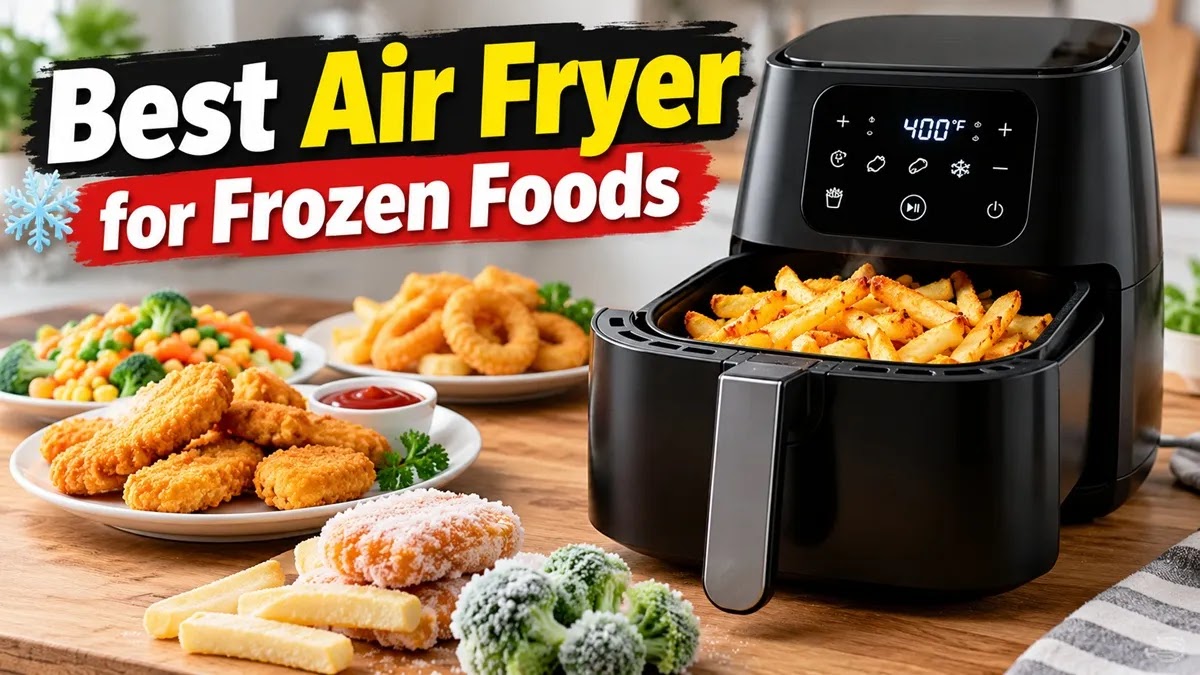
Frozen foods present a specific thermodynamic hurdle: they release high volumes of ice melt during the first 4 to 6 minutes of heating. If an air fryer lacks either the heating wattage to flash-vaporize this moisture or the aerodynamic velocity to exhaust it through rear vents, that moisture pools at the bottom of the basket, turning breading limp and dough soggy. Choosing the best air fryer for frozen foods requires balancing high airflow velocity, tight thermal control, and a basket geometry that lets steam escape while keeping food elevated. Below is an editorial evaluation of the top five countertop units engineered to handle the demands of frozen-to-table cooking.
Side-by-Side Comparison
| Image | Product | Key Feature | Buy Now |
|---|---|---|---|

|
🏆 Best Overall Ninja Foodi DZ201 DualZone | Based on published aerodynamic and heating specifications, the DZ201 provides the most practical solution to frozen food preparation. When frozen items drop into an air fryer, they cause an immediate temperature dip. | Buy Now |
|
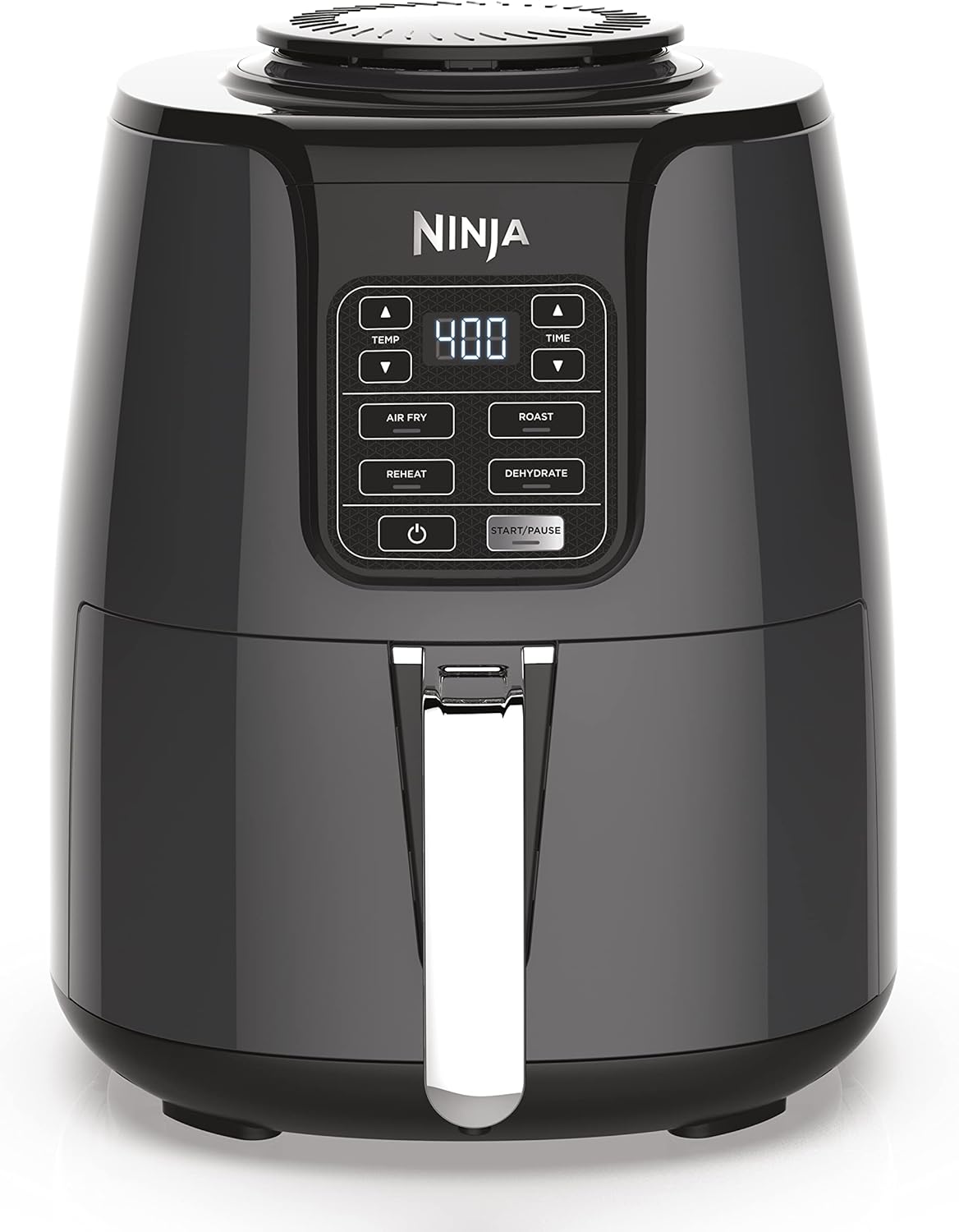
🏆 Best Budget Pick Ninja AF101 | The AF101 remains a top budget performer because its small chamber volume concentrates convective heat directly onto frozen items. In a 4-quart basket, a 1500-watt heating element delivers an impressive heat-to-volume ratio. | Buy Now |

|
🏆 Best for Maximum Crisp Cosori TurboBlaze 6.0-Quart | The Cosori TurboBlaze stands out for its 450°F thermal ceiling and variable-speed DC motor. Standard 400°F air fryers can struggle with thick frozen foods; the exterior breading can brown before the interior reaches food-safe temperatures, or lingering steam can soften the breading. | Unavailable |
Best 5 Tested & Recommended Air Fryer for Frozen Foods
1. Ninja Foodi DZ201 DualZone (paid link)
🌟 Key Features That Stand Out
- ✓ DualZone Technology: Two completely isolated 4-quart baskets prevent flavor transfer and separate cooking chambers.
- ✓ Smart Finish & Match Cook: Smart Finish syncs cook times across disparate settings; Match Cook duplicates settings across zones.
- ✓ 1690-Watt Combined Output: High thermal recovery power quickly vaporizes surface frost.
- ✓ Wide Temperature Spectrum: 105°F to 400°F covers slow moisture dehydration up to rapid surface crisping.
- ✓ Nonstick Crisper Plates: Elevated inserts allow melted ice and rendered fats to drop away from breading.
💡 Why We Recommend It
Based on published aerodynamic and heating specifications, the DZ201 provides the most practical solution to frozen food preparation. When frozen items drop into an air fryer, they cause an immediate temperature dip. The DZ201’s split-cavity design keeps the volume of air around each portion small, allowing the 1690-watt system to recover crisping temperatures faster than large, cavernous single-basket units. While it caps out at 400°F—50 degrees lower than some specialized single-basket crispers—its ability to synchronize distinct frozen snack profiles without steaming makes it our top overall recommendation.
🎯 Best For
⚖️ Pros and Cons
- Smart Finish eliminates timing guesswork for multi-item meals.
- Independent fans optimize heat recovery in smaller air volumes.
- Dishwasher-safe baskets and crisper plates.
- Zero moisture transfer between meats and starches.
- Individual 4-qt baskets cannot fit wide 12-inch frozen pizzas.
- Requires 15.6 inches of horizontal counter space.
- Maximum temperature capped at 400°F.
2. Ninja AF101 (paid link)
🌟 Key Features That Stand Out
- ✓ 1500-Watt High-Density Heating: High wattage relative to its small 4-quart capacity for fast preheating.
- ✓ Ceramic Nonstick Coating: PTFE-free, ceramic-coated interior basket and crisper plate for durability.
- ✓ Elevated Crisper Plate: Suspends frozen food above the basket floor, maximizing 360-degree bottom airflow.
- ✓ Compact 8.5" Footprint: Tucks easily under standard upper kitchen cabinets.
💡 Why We Recommend It
The AF101 remains a top budget performer because its small chamber volume concentrates convective heat directly onto frozen items. In a 4-quart basket, a 1500-watt heating element delivers an impressive heat-to-volume ratio. This fast thermal concentration quickly vaporizes surface frost on breaded foods, yielding a snappy exterior before the inside turns dry or gummy. While its interface is basic and lacks advanced multi-stage programming, its build quality and ceramic interior provide exceptional long-term value at an entry-level price point.
🎯 Best For
⚖️ Pros and Cons
- Ceramic coating is durable and free of PTFE/PFOA.
- Fast thermal recovery in a compact chamber.
- Straightforward digital controls.
- 4-quart capacity requires multiple batches for families.
- Noticeable blower noise in small kitchens.
3. Cosori TurboBlaze 6.0-Quart (paid link)

🌟 Key Features That Stand Out
- ✓ Brushless DC Motor: Adjusts fan rotation across five speeds for precision convective heat transfer.
- ✓ 450°F Maximum Sear Temperature: Surpasses the standard 400°F threshold to crisp frozen surfaces faster.
- ✓ 6-Quart Square Basket: Square geometry offers more flat cooking surface area than round designs of identical volume.
- ✓ Nine Cooking Functions: Air Fry, Roast, Grill, Frozen, Bake, Broil, Dehydrate, Reheat, and Proof.
- ✓ Dedicated "Frozen" Algorithm: Tailors initial low fan speed to thaw interior ice before accelerating to max speed and heat to crisp the exterior.
- ✓ Energy-Efficient 1725-Watt Draw: DC motor reduces cook times by up to 46% compared to older Cosori models.
💡 Why We Recommend It
The Cosori TurboBlaze stands out for its 450°F thermal ceiling and variable-speed DC motor. Standard 400°F air fryers can struggle with thick frozen foods; the exterior breading can brown before the interior reaches food-safe temperatures, or lingering steam can soften the breading. The TurboBlaze’s dedicated "Frozen" function balances this automatically, providing a gentle thaw followed by a high-velocity 450°F blast. This thermal profile produces a crisp crust on commercial frozen products without drying out the interior.
🎯 Best For
⚖️ Pros and Cons
- 450°F max temperature browns frozen breading faster than 400°F units.
- Square basket geometry provides more usable flat surface area.
- DC motor runs noticeably quieter than traditional AC-fan air fryers.
- Dedicated "Frozen" preset automates multi-stage thawing and crisping.
- Single-basket design prevents cooking two different foods at different temperatures.
- Nonstick coating requires careful cleaning with non-abrasive sponges.
- Exterior casing can warm up during extended 450°F cooking runs.
🏆 Our Top Pick
After comparing all five, our top recommendation is:
Ninja Foodi DZ201 DualZone
Based on published aerodynamic and heating specifications, the DZ201 provides the most practical solution to frozen food preparation. When frozen items drop into an air fryer, they cause an immediate temperature dip.
The DZ201 eliminates this compromise through its independent dual-chamber system. Its Smart Finish processor synchronizes the end times across both baskets, ensuring everything is served hot and crisp at once. While it requires more counter width than standard units and lacks a 450°F sear setting, its balance of versatility, rapid heat recovery, and moisture separation makes it the most capable air fryer for day-to-day frozen food preparation.